No products in the cart.
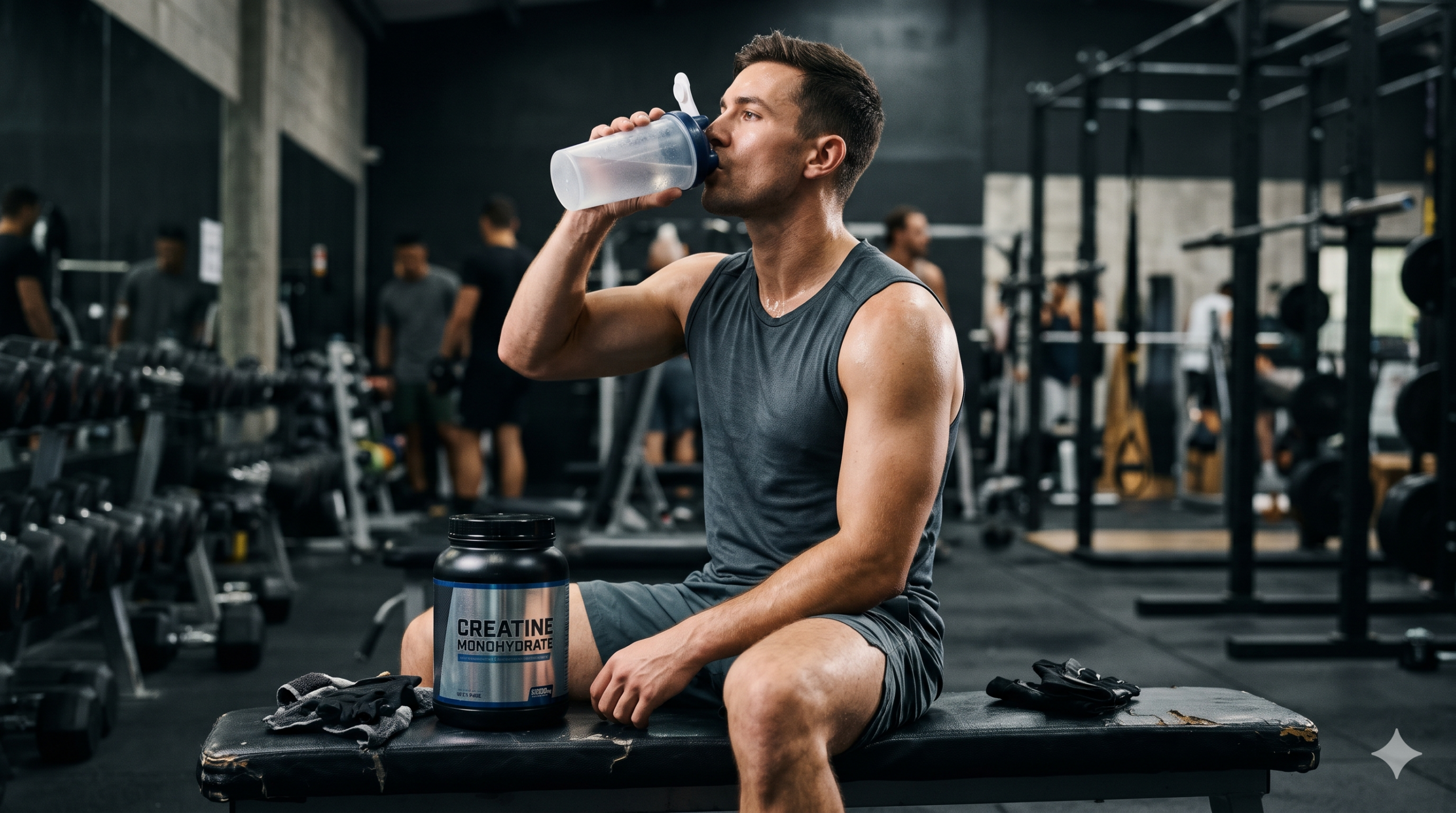


Few gym supplements carry as much scientific backing—and as many unnecessary rumors—as creatine monohydrate. From locker-room talk about hair loss to fears of kidney damage, newcomers are often skeptical.
The clinical reality is far simpler: creatine monohydrate is one of the most thoroughly tested, cost-effective performance aids in the world.
Your muscles naturally store a molecule called Adenosine Triphosphate (ATP) to produce short bursts of explosive energy—like sprinting or lifting a heavy dumbbell. However, ATP burns out in just a few seconds.
Creatine saturates your cells with phosphocreatine, helping your body rebuild ATP faster. You won’t suddenly grow giant biceps overnight, but you will notice an extra rep on your final set and quicker recovery between intervals.
Take 3g to 5g of pure, micronized creatine monohydrate every day. Timing matters far less than consistency—whether you drink it in the morning or post-workout with juice or a shake, simply take it consistently every single day.


Always available!

100% surety on all products

10am - 7pm, 7 days/week



Leave a comment